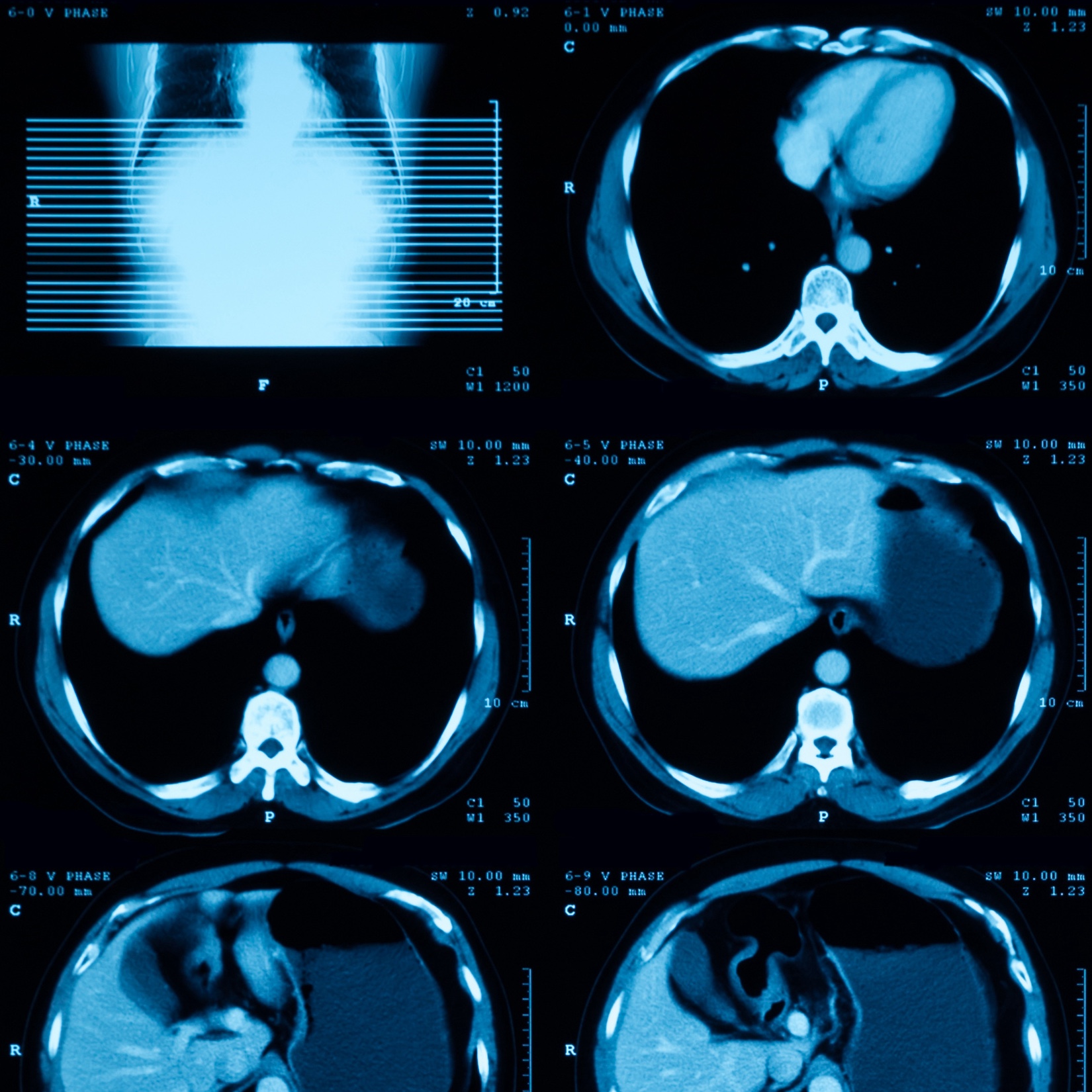
Body composition, meaning how much muscle, how much fat and where, predicts how a patient will do. It is also rarely measured, because extracting it from a CT scan by hand costs radiologist time nobody has.
ZHAW’s Centre for AI and the Cantonal Hospital Aarau had laid the groundwork in preliminary studies, some of it my own master’s project thesis. This project took those prototypes and developed them far enough to run a medical validation and a prospective study, and to publish the joint scientific work.
Making it work with less data
Clinical annotation is the bottleneck, so most of the effort went into needing less of it:
- Domain knowledge as an input constraint. Tissues occupy known ranges on the Hounsfield scale. Encoding those ranges as extra binary input masks improved intramuscular adipose tissue segmentation by up to 5 per cent, and beat the baseline while using half the training data.
- Unsupervised domain adaptation. A domain sanity loss transfers a model trained on public data to a specific hospital’s scanners and protocols without target labels. It reaches 72.8 per cent vertebra identification accuracy with no target labels and 89.2 per cent with ten, on par with full supervision using roughly twenty times fewer.