Zurich & Winterthur, Switzerland

Pascal Sager

Co-founder & CTO at Binabik AI. Finishing a PhD on how machines should learn.

Physical AI World models Neuro-inspired learning ZHAW CAI ETH AI Center
Portrait of Pascal Sager
Scroll

What I'm doing now

Building robots that learn from the machines they work with.

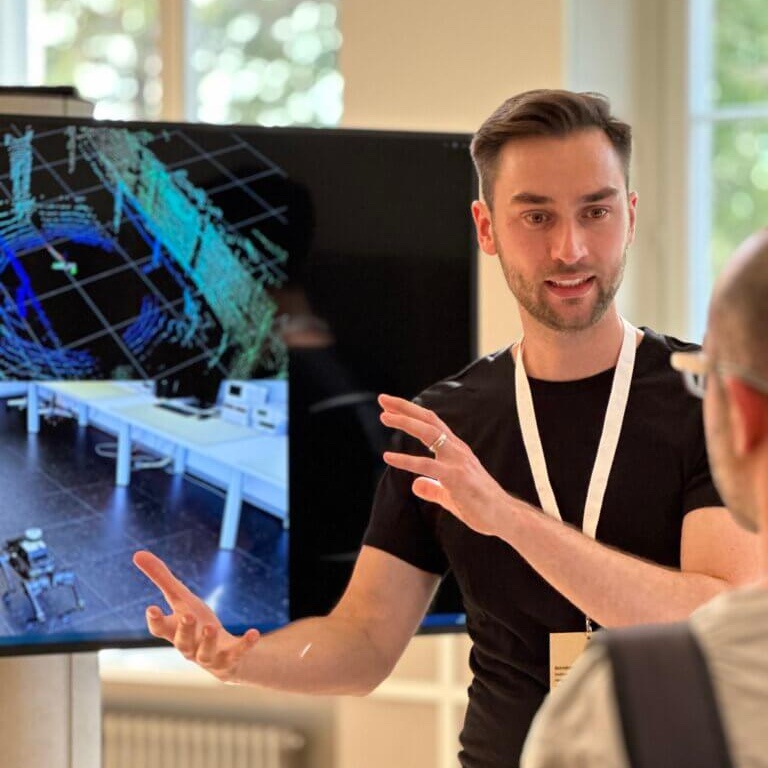
I co-founded Binabik AI and lead it as CTO. We build physical AI for industrial machine tending. Mobile bimanual robots that load, unload and supervise the machines a person currently stands next to.

Our architecture splits the problem into three systems. One learns low level sensorimotor skills, one learns the operating logic of a machine family, and one orchestrates whole workflows. What makes it work is that we train on machine data as well as human data. The machine itself adjudicates every episode, so a large part of our supervision arrives for free as a by product of production. That is why we reach a given capability with far less data than an approach built on teleoperated demonstration alone.

Alongside that I am finishing a PhD at the Centre for AI (ZHAW), as a visiting researcher at the Institute of Neuroinformatics (UZH and ETH) and an associated PhD student at the ETH AI Center, supervised by Prof. Dr. Thilo Stadelmann and Prof. Dr. Benjamin Grewe. The thesis asks why deep learning keeps failing in the same three ways outside the lab, and what has to change in how these systems represent knowledge.

I also just raised funding to start an association that makes physical AI something the public can touch and question rather than only read about, through the City of Winterthur's co-creation programme.

Research funding raised
CHF 0k
Publications
0+
Funded projects led or joined
0
Theses supervised
0
/001Research Four chapters

The story of my PhD.

It runs as one argument in four chapters. Diagnose where deep learning breaks, show why the failure is structural, fix what constraints can fix, then ask what has to change in the representation itself.

01

Where today's AI actually breaks

Deep learning fails in the same three ways whenever it leaves the lab. It breaks under distribution shift, it cannot recombine what it has learned into something new, and its errors compound over long horizons. I mapped this across 87 papers and 33 benchmarks on agents that operate computers, and found six gaps that scale alone does not close. Two further studies back the diagnosis from other directions. The compression methods that make large language models affordable measurably damage the reasoning they are meant to preserve, and even architectures built for compositionality fail on rule combinations they have not seen.
02

Why they break, and what the weights reveal

If the failures are structural then the structure should be visible in the weights. I derived a mathematical framework for the self-attention matrices at the heart of every Transformer and proved that the training objective dictates their shape. Bidirectional training forces symmetry. Autoregressive training forces directionality and column dominance. The result holds across ModernBERT, GPT, LLaMA 3 and Mistral, on text, vision and audio. The conclusion is uncomfortable and useful in equal measure. These models do not discover the structure of the world. They embed the statistical structure of their loss function.

03

Constraining what a model may learn

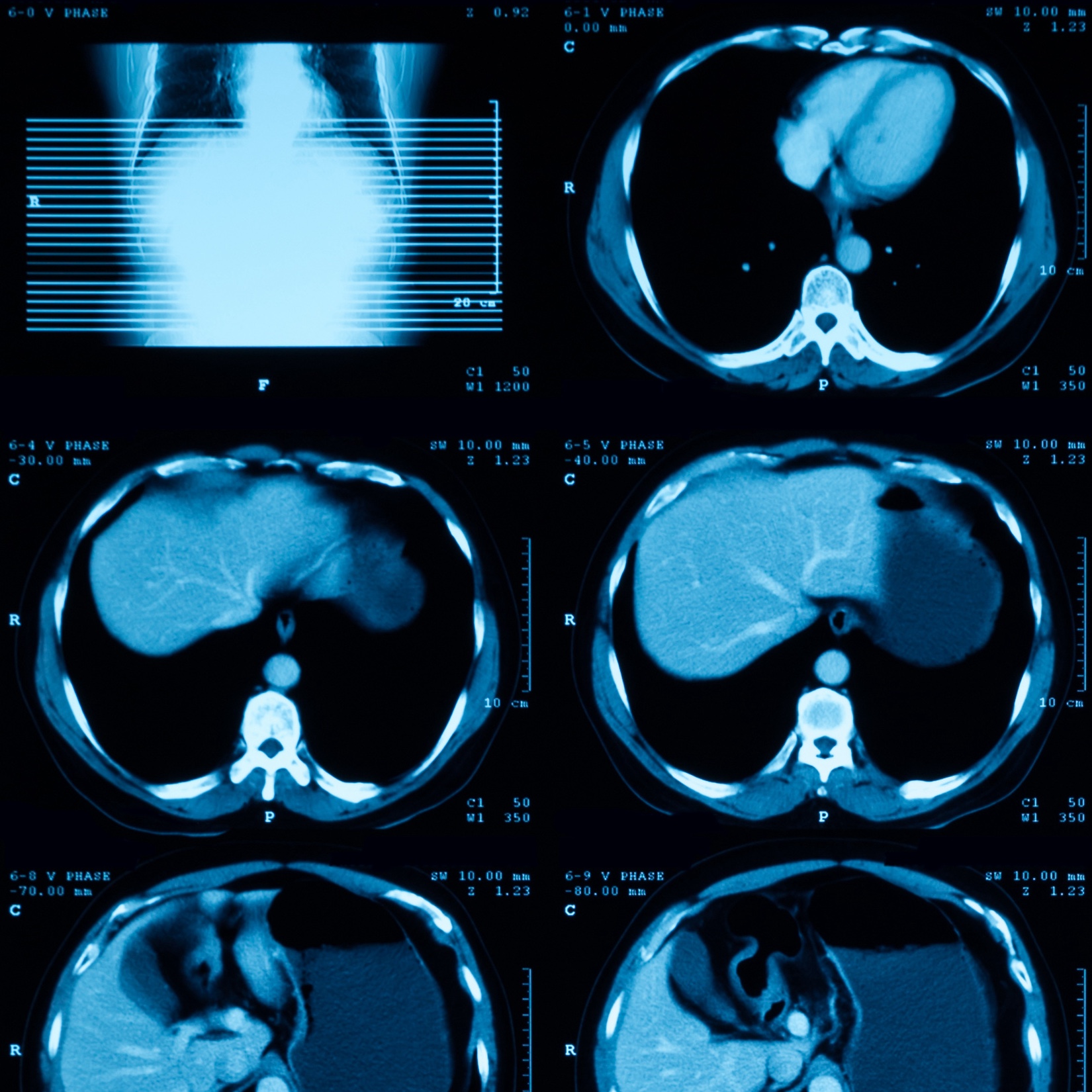
Given that diagnosis, can hard constraints fix specific failure modes rather than papering over them? The pattern that keeps working is to build what we already know into the architecture instead of hoping the optimiser rediscovers it. Encoding tissue density ranges as an input constraint beat a baseline trained on twice the clinical CT data. Grounding a retrieval model in external structure took first place on the CLEF CheckThat! 2025 development leaderboard with no external training data at all. The same principle carries into world models, where imposing stable dynamics on the latent space bounds the error growth that otherwise makes long horizon prediction useless.

04

Changing the substrate itself

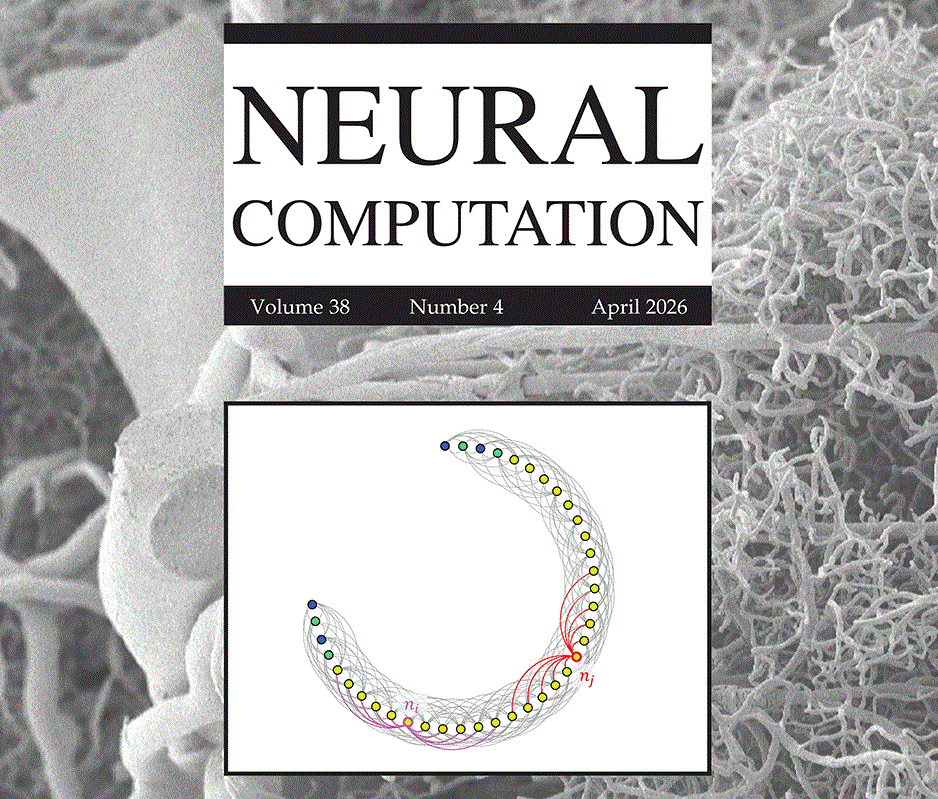
Constraints treat the symptom. The deeper question is whether the representation has to change. The Cooperative Network Architecture replaces the distributed activation patterns that deep networks rely on with structured, recurrently connected assemblies of neurons called nets, built from overlapping fragments learned without supervision from regularities in the input. Because those fragments compose by construction, the architecture completes occluded figures, tolerates noise and handles out of distribution patterns without being retrained. Those properties fall out of the representational principle rather than being engineered into a loss.

/002Funded projects 7 projects, 2019 to now

Projects I lead or contribute to.

Project lead / Since 2025

Learning World Models through Actionable Representation

My own DIZH fellowship. Neuroscience suggests the brain builds internal models of the world by acting on it. This project brings that idea into AI, so systems can plan rather than pattern-match.

World modelsNeuro-inspiredRobotics
Machine Learning for Body Composition Analysis

Deputy project lead / 2023 to 2025

Machine Learning for Body Composition Analysis

Turning a promising prototype into a tool clinicians actually use. Automated tissue segmentation on CT, built to work with the little annotated data a hospital can spare.

Medical imagingDeploymentData efficiency
Stability of self-organising net fragments

Project team / 2023 to 2025

Stability of self-organising net fragments

Taking "A Theory of Natural Intelligence" from a proposal about how intelligence emerges in biological learners to a working implementation inside deep networks.

Neuro-inspiredRepresentationTheory
Visual food waste analysis for sustainable kitchens

Project team / 2019 to 2021

Visual food waste analysis for sustainable kitchens

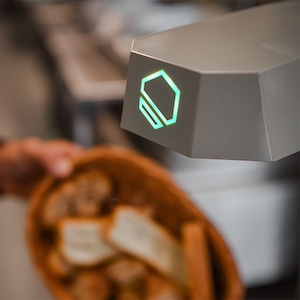
A camera over the bin. Every time something is thrown away it is photographed, segmented and weighed, so a kitchen can see what it is wasting and plan around it.

Computer visionSustainabilityEmbedded
Optical music recognition in the wild

Project team / 2019 to 2022

Optical music recognition in the wild

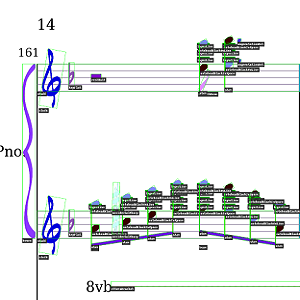
Sheet-music scanning worked beautifully on clean scans and fell apart on a phone photo of a dog-eared page. Unsupervised domain adaptation doubled detection performance on real-world input.

Computer visionDomain adaptationProduct
Making physical AI something the public can touch

Initiator / Since 2026

Making physical AI something the public can touch

A newly funded association to put working robots in front of the public, so the debate about physical AI is had by people who have actually used one.

OutreachRoboticsAssociation
/003Publications 11 papers

* denotes shared first authorship.

/004Experience Industry and academia in parallel

Where I work.

2026 to now Now

Binabik AI

Co-founder & Chief Technology Officer

Binabik builds physical AI for industrial machine tending. Mobile bimanual robots that load, unload and supervise the machines a person currently stands next to. I lead the technology, which means the learning architecture, the data strategy and the engineering team. Based at Technopark Winterthur.

2025 to now Now

ETH AI Center, ETH Zurich

Associated PhD Student

Affiliated with the ETH AI Center, supporting interdisciplinary research at the interface of robotics and artificial intelligence.

2024 to now Now

Institute of Neuroinformatics, UZH & ETH Zurich

Visiting Researcher

Visiting PhD student in the Neural Learning and Intelligent Systems group of Prof. Dr. Benjamin Grewe, working on biologically inspired mechanisms for building structured internal models.

2020 to now Now

Centre for AI, ZHAW

PhD Student, Head of AI Demonstrators, Board Member of the Sustainable Impact Program

Joined as a research assistant in computer vision, then took over GPU infrastructure and the AI demonstrator programme. Started my PhD on advanced learning algorithms in 2023, supervised by Prof. Dr. Thilo Stadelmann. Also serves on the board of ZHAW's Sustainable Impact Program.

2023 to 2024

AlpineAI AG

Senior Data Scientist

Privacy preserving AI for regulated industries. I worked on SwissGPT and on enterprise assistive agents, deploying large language models under strict data protection guarantees.

2013 to 2020

Various employers

Hardware & Software Engineer

Before moving into AI I worked on embedded systems, IoT and full stack engineering across several companies.

/005Teaching 8 theses supervised

Courses & supervision.

I lecture on the AI track at ZHAW and assist in Neuroinformatics at ETH and UZH. Most of the supervision runs alongside my own research, so students work on open questions rather than exercises.

Courses I teach

  • Lecturer Artificial Intelligence ZHAW · BSc and MSE
  • Lecturer Data Mining and Machine Learning ZHAW · BSc and MSE
  • Lecturer Intelligent Systems ZHAW · BSc and MSE
  • Teaching assistant Neuroinformatics ETH and UZH · MSc

Theses supervised

  1. MSc

    Accelerating Discrete Text Diffusion via Symmetric Initialization and Curriculum Learning

    Jeremias Baur

    ETH Zurich
  2. MSc

    COGITAO: A Procedural and Object-Centric Framework to Evaluate Compositional and Systematic Generalization

    Klim Trojan

    ETH Zurich
  3. MAS

    Confidence-Rated Predictions with Deep Learning for Music Object Detection

    Urs Gut

    ZHAW
  4. BSc

    World Models for Long-Horizon Planning: Discrete Subgoal Generation for Maze Navigation

    Simon Brand, Laura Leiser

    ZHAW
  5. BSc

    Shaping Latent Space by Architecture for Improved World Model Planning

    Daniel Bucher, Björn Wagner

    ZHAW
  6. BSc

    Natural Language-Instructed Autonomous Agent for Computer Control

    Rebekka von Wartburg-Kottler, Gabriel Nobel

    ZHAW
  7. BSc

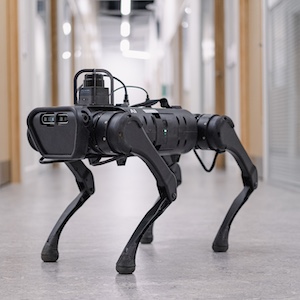
    RoboDog III: Building a Vision and/or Sound-Based AI Demonstrator on a Robotic Platform

    Juri Pfammatter, Daniel Schweizer

    ZHAW
  8. BSc

    RoboDog II: Building a Vision and/or Sound-Based AI Demonstrator on a Robotic Platform

    Tenzin Samdrup Langdun, Martin Oswald

    ZHAW
/006Speaking and press Open to invitations

Talks & exhibitions.

I speak about AI and learning systems when the room is the right one. Recently at Machine Cluster Winterthur, the IT Department of the Canton of Zurich and START Hack in St. Gallen, and over the years at Scientifica, Digital Night Winterthur and in corporate sessions such as Roche. Formats range from a conference talk to a hands on workshop to a stand where people get to drive a robot themselves.

If you are putting something together and it fits, get in touch.

Press & media

Tages-Anzeiger ZHAW House of Winterthur Der Landbote TeleBielingue TeleTop OBA Journal Founded Journal
/007Personal Off the clock

Personal

Away from the screen.

I grew up in Waldkirch, a small village in eastern Switzerland, and today I live in Flawil with my wife and our three children.

Most weeks are a balancing act between being a father, finishing a PhD and building a company. It works because of the people around me, and I know that not everyone gets that kind of support. The other thing that keeps it steady is my bike. On a long ride the noise settles and problems either solve themselves or stop mattering.

Work is not something I endure. It is a real passion and I start to miss it when I am away from it for too long. Family time is exactly the same, which is why I keep specific slots for the people I love rather than letting one side quietly eat the other.

Otherwise you will find me outdoors. Hiking, camping, a fire and something on the grill. I am also, by every available measure, hopeless at anything musical.

Born
Waldkirch, a small village in eastern Switzerland
Lives
Flawil, Switzerland
Family
A wife and three kids
Recharges
On a bike, ideally for a long time
Reliably bad at
Singing, dancing, anything musical

Contact

pascal@binabik.ai

Robotics and physical AI, research collaborations, talks and workshops, or joining Binabik. Email is the fastest route and I answer everything that is not a cold pitch.

Based in
Zurich and Winterthur, Switzerland
Local time
--:--:--